These Are Our Demands
continue reading »

.jpg)
After that revolution ousted the monarchical system and put an end to those trailing behind it and other remnants, Egypt began a new era in a republican system differing quite a bit from the replica rolex that preceded it, “the military system.” But was it really different or did it actually bear much similarity to the previous system?
.jpg)
What Does “Individual Election” Mean?
It means the electoral rounds are divided up according to the number of members of the People’s Assembly. In each round, there are 2 candidates: one from the upper classes, and one from the class of the workers and peasants. You must then choose only 2 from among all of the candidates in your round.
.jpg)
We confirm that the demonstrators in the squares of Egypt represent a broad sector of the Egyptian people. We declare our insistence on transferring power to a civilian authority (parliament and president) elected by April 2012 at the latest, and that any agreements or dialogues occurring between the military council and the political forces that exclude the participation of the revolutionary forces are null and void.
.jpg)
The decisive issue for Tahrir Square right now is disarmament. We stand before a bloc of the country that does not want any more dead or wounded. They want the parliamentary and presidential elections to be held on time.
.jpg)
And oh sweet ones, we want the presidential palaces
To become hotels that will make millions.
A republic, oh you best of men, where no parliamentarian
Serves for more than two terms.
.jpg)
Once upon a time we used to wage war in the name of God and say to the world: “We are Muslims ruled by God’s Qur’an and the Sunna of Muhammad, peace be upon him.” And those who died would be considered martyrs who would go to heaven. And our conquests ended successfully in Egypt and many other countries, thanks be to God.
.jpg)
A president who loves our Lord and loves Muhammad, peace and prayers be upon him
A president who loves our people, who does not rule them with the Emergency Law or order them around
The president of Egypt is not idle; he takes his people’s money and thinks Egypt and her people are his own personal property.
.jpg)
They are not street children ♫ They are Egypt’s children
A president living in palaces, and with him his followers
♫ Egypt’s children are living in slums, under bridges, and on sidewalks
.jpg)
While I was in Tahrir, I got married for the second time
They told me, “One is enough.”
I said, “It is acceptable for me to have the second, as long as she comes first and not second.”
They said, “Of course she is a young and beautiful girl.”
.jpg)
We have oppressors and others wrongfully accused of oppression, we have the argument that it’s all “terrorism and extremism,” and we have people who are either envious of this blessed call or despise cheap replica watches. I’ve implored God, the One, the Alone, for help in explaining the meaning of Salafism, and have quoted the words of the imams and stars of this community from among the Salaf, our righteous predecessors in Islam. I’ve abridged their statements significantly, since this is intended to be a statement and explanation, not a detailed description, focusing on how to define Salafism and what it means to belong to this group.
.jpg)
Today, the Popular Committees to Defend the Revolution came together with Egypt’s workers to celebrate the first Labor Day following the January Revolution. Today, workers stood in complete confidence, having embarked on a great revolutionary experience in which they realized their strength and ability learned that their rights can only be wrested back through continued struggle, not by begging for “a favor, Mr. President,” as the regime’s collaborators made us believe for thirty years.
.jpg)
Egypt is passing through a dangerous stage. It has come to a fork in the road many months after the beginning of the great Egyptian revolution, which ended on 11 February. Following that date, groups of the elite took on the task of completing the journey towards realizing the people’s demands, thereby completing the revolution. However, the revolution’s path immediately changed to one of partisan strife, which overtook its greater portion at the expense of the people.
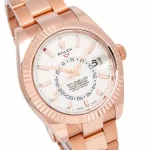
Understanding the quality of a watch can be a daunting task, especially for newcomers in the world of horology. However, even seasoned enthusiasts often find themselves grappling with the intricacies of what truly makes a watch exceptional. Amidst a sea of watches boasting similar specifications yet vastly different price tags, distinguishing a quality watch from … Continue reading “Deciphering Replica Watch Quality – A Comprehensive Guide”
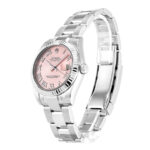
In the realm of high-end horology, the Rolex Yacht-Master II stands as a beacon of opulence and precision engineering. Since its introduction in 2007, it has not merely followed in the footsteps of its esteemed predecessor, but rather, it has set a new standard in luxury watches. This masterpiece seamlessly integrates the functional demands of … Continue reading “The Definitive Guide to the Rolex Yacht-Master II”

Renowned watch artist Tamás Fehér, featured at the ABTW Store, unveils his latest horological masterpiece, a homage to the iconic Rolex Daytona 6265 Big Red. Fehér’s signature black and white rendering, capturing impeccable details, elevates the unattainable beauty of this vintage timepiece to larger-than-life proportions. To enhance the motorsport essence, Fehér custom-made a checkered flag, … Continue reading “The Tribute to Rolex Daytona 6265 in Exquisite Watch Art”
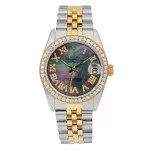
Luxury watches adorned with diamonds and gemstones have long been associated with opulence and sophistication. These exquisite timepieces not only serve as a statement of style but also hold the allure of potential investment value. The question arises: Are diamond and gemstone watches a good investment? In this blog, we will explore the factors to … Continue reading “Are Diamond and Gemstone Watches a Good Investment?”
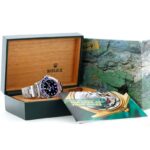
Rolex has released two new versions of the replica Rolex GMT-Master II – one in 18-carat yellow gold and the other in yellow Rolesor – with grey and black ceramic Cerachrom bezel inserts. The watch now comes in a new color combination. The gold shimmer of the Jubilee strap contrasts with the darker tones of … Continue reading “2023 Best Rolex GMT-Master II Luxury Watches in Popularity”


Designed by 
Copyright © 2017 Tahrir Documents. All rights reserved.
.jpg)
.jpg)
.jpg)
.jpg)
.jpg)
.jpg)
.jpg)
.jpg)
.jpg)
.jpg)
![The Liberation Party [Hizb al-Tahrir]: To Clarify](./Tahrir/timthumb(11).jpg)
.jpg)
.jpg)
.jpg)
.jpg)
.jpg)
.jpg)
.jpg)
.jpg)
.jpg)
.jpg)
.jpg)
.jpg)
.jpg)
.jpg)
.jpg)
.jpg)
.jpg)
.jpg)
.jpg)
.jpg)
.jpg)
.jpg)
.jpg)
.jpg)
.jpg)
.jpg)
.jpg)
.jpg)
.jpg)
.jpg)
.jpg)
.jpg)
.jpg)